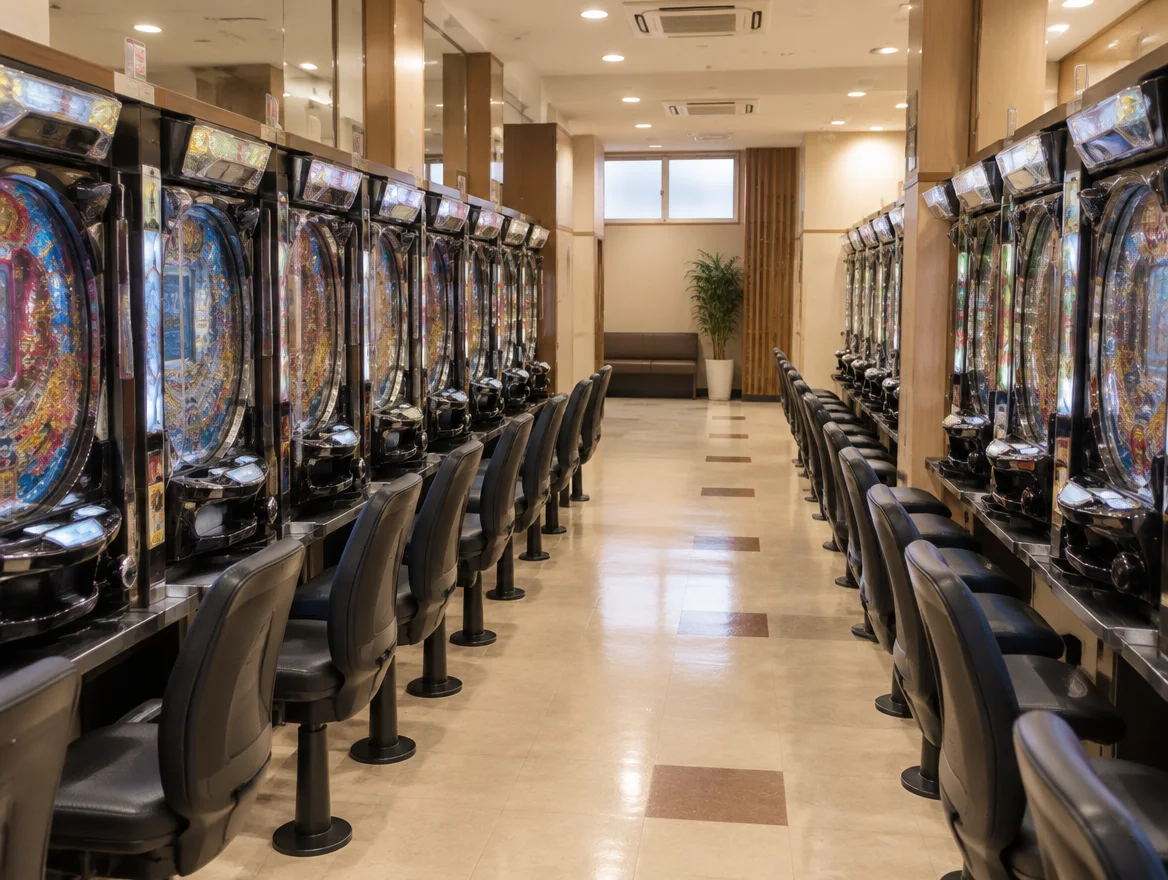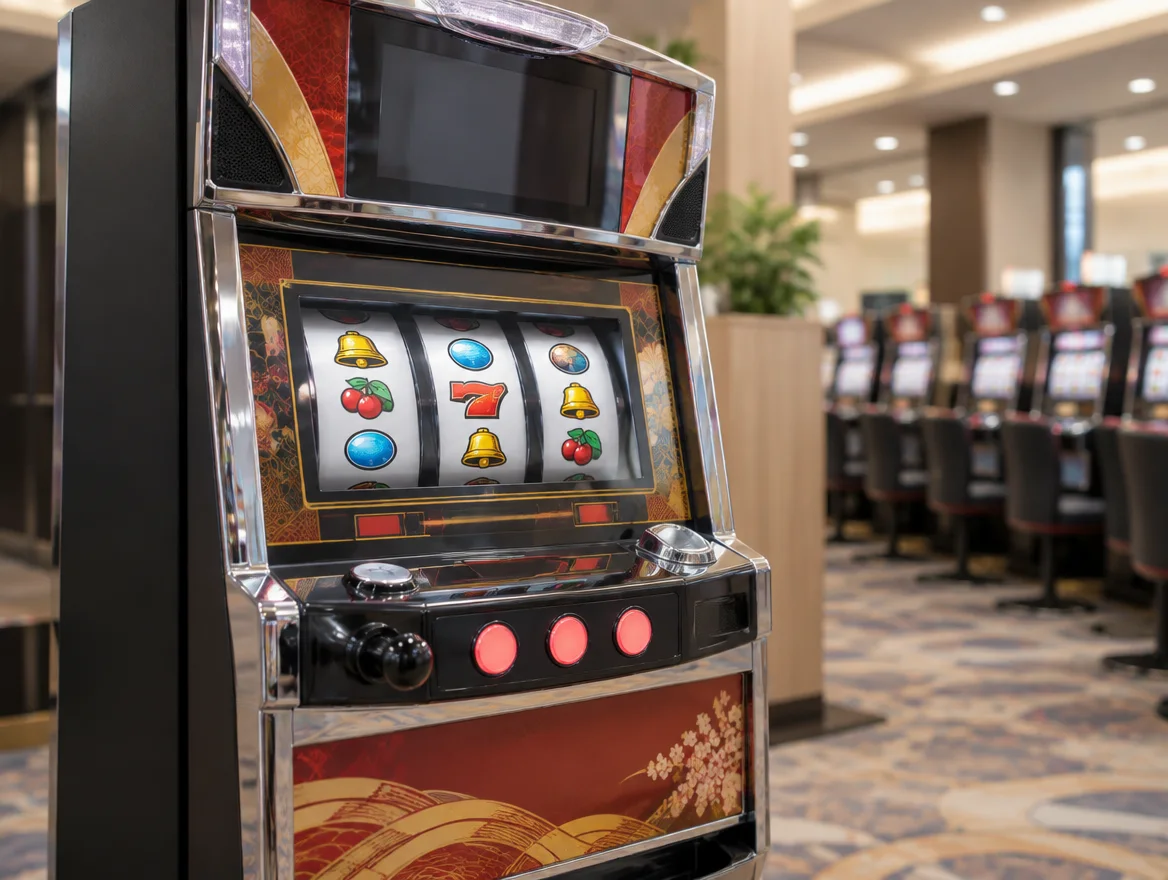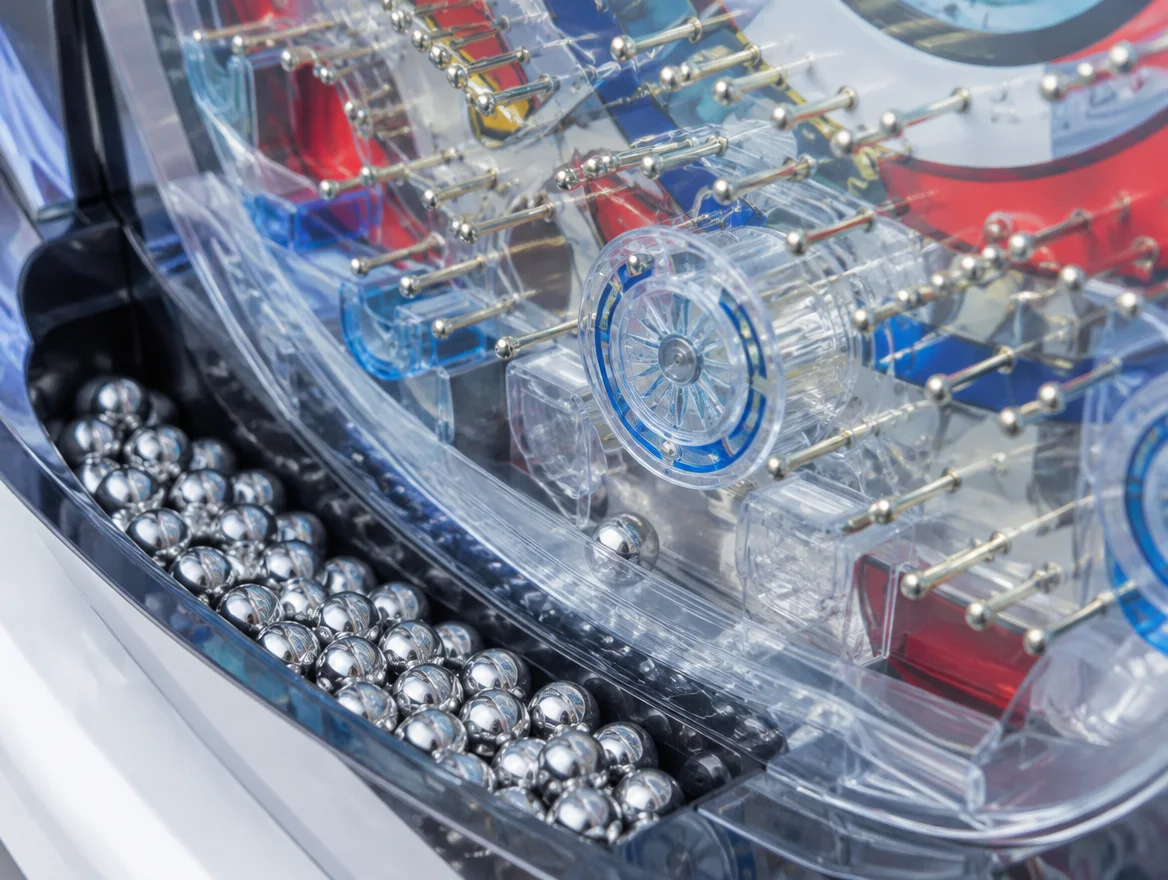
Pachinko is about a century old, and its history tracks modern Japan: festival amusements before the war, a postwar boom built on scrap metal and ingenuity, an electronics revolution, and today’s tightly regulated, smaller industry. Here’s the story in one place, sourced from the industry’s own reference and cross-checked against Japanese Wikipedia (a secondary source, flagged where used).
1. Origins: European wall games and festival stalls
The Pachinko Industry Web Reference (PIWR) explains that the origin of “modern” pachinko is disputed. Older accounts credited imported table games such as the Corinth Game and bagatelle (1912–1926). Today it’s commonly believed to come from vertical wall-mounted game machines found across Europe (PIWR – history).
In Japan, stall keepers first ran these games at ennichi (temple and shrine festival days). From the mid-1920s, machines that flicked 1-sen copper coins became popular. The government banned them because flicking coins bearing the imperial chrysanthemum was considered disrespectful, so tokens and balls took over. As prizes moved from sweets to cigarettes, pachinko became a game for adults (PIWR).
Japanese Wikipedia dates the first licensed pachinko hall to 1930 in Nagoya (ja.wikipedia).
Wartime: pachinko was treated as a “useless” industry. Metal was requisitioned, balls included, and halls were forced to close (PIWR). Japanese Wikipedia dates the wartime ban to 1942.
2. The postwar boom: the Masamura gauge
Pachinko restarted with prewar machines found in rural areas. Between 1945 and 1954, Takeichi Masamura, still revered as the “god of pachinko”, created the Masamura gauge: a pin layout that made the board exciting and became the basis of the modern pachinko board (PIWR).
In the early 1950s, rapid-fire machines (連発式, renpatsu-shiki) fed balls automatically at 140–160 per minute, and at the peak more than 45,000 halls were operating (PIWR). Japanese Wikipedia adds that a 1948 law made halls a licensed business, and that under-18s were barred from entry from 1951.
3. The 1954 ban and the tulip era
Rapid-fire play fuelled gambling concerns and street prize-buyers. The government banned rapid-fire machines in 1954, and from April 1955 halls had to use single-shot machines. The number of halls fell below 10,000 (PIWR).
Makers responded with new board features (yakumono), including the famous tulip (チューリップ) pocket that opens to catch balls. Japanese Wikipedia dates the tulip to 1960. Around 1965, “Olympia machines” appeared, the Japanese-style slot machines that pachislot grew from (PIWR). Suburban bowling alleys were converted into halls as car ownership grew.
4. Fever: the electronic revolution
In 1980 SANKYO’s Fever machine was a blockbuster, and halls opened by the hundreds each year. The hanemono (winged) machine followed in 1981 (PIWR). Japanese Wikipedia names it Zero Tiger. Prepaid cards and colour screens followed in the Heisei era, and PIWR describes a market that grew to about ¥30 trillion.
Key rule milestones from Japanese Wikipedia (secondary):
| Year | Milestone |
|---|---|
| 1978 | Ball rental price set at ¥4 |
| 1985 | New machine-testing rules |
| 1990 | Kakuhen (raised-probability bonus) introduced. See kakuhen explained |
| 1992 | First CR (card-reader) machine |
| 2012 | Dynam lists on the Hong Kong Stock Exchange, the first hall operator to list |
| 2015 | Industry agreement: lowest odds about 1/400 → about 1/320 |
| 2018 | Maximum payout per jackpot cut from 2,400 to 1,500 balls |
Source: ja.wikipedia パチンコ. TODO: replace with primary NPA or industry documents.
5. Pachislot’s parallel story
| Year | Milestone (Japanese Wikipedia unless noted) |
|---|---|
| 1964 | Olympia, made by a Sega–Taito venture, is the first reel machine |
| 1977 | Gemini (Max Shoji), sold as “American pachinko” |
| 1985 | 1号機: the first generation under formal testing |
| 1992 | 4号機: replay function, the start of a legendary era |
| 2007 | All 4号機 removed from halls by 30 September |
| 2018 | 6号機 |
| 2022 | Smart slots (スマスロ) debut in November (Sammy) |
Source: ja.wikipedia パチスロ. Full details are in pachislot generations.
6. Decline and reinvention
PIWR records a 1995 peak of 18,244 halls and about 9,035 at the end of 2020. It also gives 7.1 million players in 2020, citing the Leisure White Paper (PIWR – transition). English Wikipedia reports 7,665 halls in 2022 and a 2022 market of ¥14.6 trillion, measured as balls rented, against ¥35 trillion in 2005 (en.wikipedia). It dates the hall-count peak to 1997, not 1995. TODO: settle the peak year from a primary NPA statistic. The latest National Police Agency count, reported by trade paper WIGO, is 6,464 halls at the end of 2025, down 3.6% in a year (WIGO).
PIWR links the decline to social problems: children left in cars in hall car parks, consumer debt, and forged prepaid cards. It credits the industry’s response to responsible-play measures and low-rate (1-yen) pachinko (PIWR – history).
The newest chapter is technological. Smart pachinko with sealed balls arrived in 2023 (Sammy), and the Lucky Trigger design followed in 2024 (Yugi Nippon). See smart slot and smart pachinko.
Keep exploring
- Pachinko on screen: the Apple TV+ drama, Kaiji and anime
- Is pachinko gambling? The law
- Buying a classic machine for home
Quick answers
Where did pachinko come from?
The industry's own reference says it is now commonly believed to descend from vertical wall-mounted game machines found across Europe. Earlier accounts pointed to imported table games such as Corinth Game and bagatelle. In Japan, the machines first appeared at festival stalls.
When did pachinko become popular?
After the Second World War. The 'Masamura gauge' pin layout, developed between 1945 and 1954, and rapid-fire machines fuelled a boom with more than 45,000 halls at its peak, before a 1954 ban on rapid-fire machines.
When was pachislot invented?
Japanese Wikipedia records 'Olympia' (1964) by a Sega–Taito venture as the first reel machine. Pachislot under formal testing rules began with the 1号機 generation in 1985.
How many pachinko parlours are there in Japan now?
Far fewer than at the peak. The industry reference gives a 1995 peak of 18,244 halls and about 9,035 at the end of 2020. The National Police Agency count was 6,464 at the end of 2025 (reported by WIGO).
Sources
- Pachinko Industry Web Reference – industry history
- Pachinko Industry Web Reference – transition of the industry (hall counts, players)
- ja.wikipedia – パチンコ (timeline; secondary source)
- ja.wikipedia – パチスロ (pachislot history; secondary source)
- en.wikipedia – Pachinko (market size and hall counts; secondary source)
- Sammy – smart pachislot and smart pachinko (2022/2023; Japanese)
- WIGO – NPA hall count at end-2025 (6,464; Japanese)
- Yugi Nippon – Lucky Trigger rule (2024; Japanese)
Facts on this page were last checked against these sources on 4 October 2026. Rules, prices and venues change, so always follow the signs and staff at the venue.