You’ve finished playing. The staff count your balls, or your card unit counts them, and you’re holding a receipt or card. Now what? Welcome to the prize counter (景品カウンター, keihin kauntā), the part of pachinko that makes it legally different from a casino. It’s also, frankly, one of the most fun bits of a first visit.
The legal background (why halls can’t pay cash, and the “three-shop system”) has its own page: is pachinko gambling?. This guide is the practical side.
Step by step at the counter
- Finish and count. Press the call button or the count button. Your balls or medals become a receipt or a balance on your card (PIWR – flow).
- Go to the prize counter (or a prize terminal in some halls).
- Hand over the receipt or card, and say what you’d like.
- Choose your prizes. General prizes, special prizes, or a mix. Leftover balls too few for the item you want can usually go on sweets or drinks.
- Leave with nothing in the tray. Balls and medals can’t leave the hall by law (FUEI JOURNAL), and they can’t be exchanged at another hall.
DMM’s English beginner guide covers the same flow, ending at the prize step (DMM).
General prizes vs special prizes
| General prizes (一般景品, ippan keihin) | Special prizes (特殊景品, tokushu keihin) | |
|---|---|---|
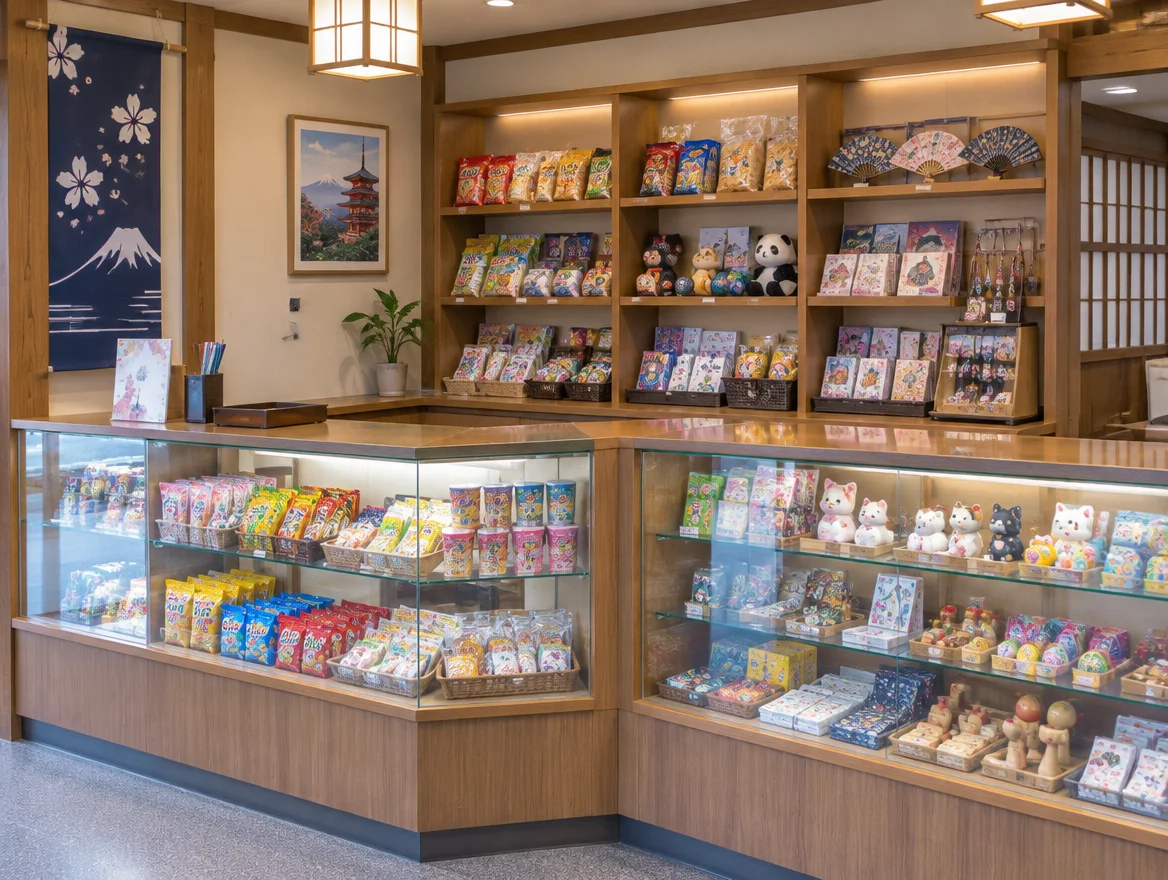
| What they are | Everyday goods: snacks, drinks, household items, cosmetics, electronics, character goods | Small sealed items (often a tiny piece of gold in a plastic case) |
| Where they go | Home with you | Some players sell them at a separate exchange shop. See the legal explanation |
| Who should pick them | Anyone who wants a souvenir | Your choice. Staff won’t tell you where an exchange shop is |
Japan Guide notes that special prizes can be sold at a window outside the hall (Japan Guide). The independence of that window is what keeps the system legal.
The rules behind the shelves
The Pachinko Industry Web Reference explains three rules that shape every prize counter (PIWR – prizes):
- Price cap: each prize item must not exceed ¥9,600 (excluding consumption tax) at market value.
- Variety: under a December 2006 industry resolution, halls agreed to make at least 500 types of items available. Halls with more than 500 machines carry at least as many types as they have machines. 200 types must be on display, from at least 5 of 7 categories: household products, clothing, groceries, food, cultural and amusement goods, personal items, and others.
- Enforcement: in October 2013 the National Police Agency (NPA) sent the industry a notice urging halls to stock a proper range of prizes.
PIWR adds that some halls now carry chilled and frozen foods, cigarettes, appliances and cosmetics, and that suburban halls may stock as much as a small supermarket.
Article 23 of the Fueiho also bans halls from giving cash or securities (such as gift vouchers) as prizes (FUEI JOURNAL).
Prize ideas for visitors
PachiPass suggestions, not rules:
- Japanese snacks and drinks. An easy, fun souvenir from small wins or leftover balls.
- Character goods where halls stock them (anime collaborations vary by hall).
- Everyday items you’ll actually use on your trip.
Exchange rates aren’t fixed nationally
How many balls a prize costs depends on the hall, and practice varies by prefecture. Japanese Wikipedia notes that halls in Osaka ended “equal-rate” exchange in October 2011 (ja.wikipedia, secondary source). If you want to know how many balls an item costs, ask at the counter. TODO: add an official or industry source on prefectural exchange-rate practice.
Tax
Most visitors won’t need to think about tax. Residents can read pachinko and tax in Japan.
Quick answers
What prizes can you get from pachinko?
Halls stock a wide range of 'general prizes' (一般景品): snacks, drinks, household goods, cosmetics, sometimes electronics and character goods. They also offer 'special prizes' (特殊景品), which are small sealed items that some players take to a separate exchange shop.
Is there a limit on how expensive a pachinko prize can be?
Yes. Under the rules, each prize item must be worth no more than ¥9,600 (excluding consumption tax) at market value.
Can I just take snacks instead of special prizes?
Yes. You can choose any mix of general prizes at the counter. Leftover balls that don't add up to a special prize are often swapped for sweets or drinks.
Can I take my balls home or to another parlour?
No. Balls and medals can't leave the hall, by law, and can't be exchanged at a different hall. Exchange everything (or save it on a member card) before you leave.
Sources
- Pachinko Industry Web Reference – availability of prize varieties (¥9,600 cap; 500 types; NPA 2013 notice)
- Pachinko Industry Web Reference – playing and exchanging for prizes (flow)
- FUEI JOURNAL – Fueiho Article 23 explained (Japanese)
- DMM Pachitown – Pachinko beginner's guide (prize step)
- Japan Guide – Pachinko
Facts on this page were last checked against these sources on 4 October 2026. Rules, prices and venues change, so always follow the signs and staff at the venue.